Security
Where are bitcoin ATMs banned?
Bitcoin ATM bans are rolling down the pipeline. Here's where they are banned.
October 20, 2026 by Bradley Cooper — Editor, Connect Media
 ChatGPT
 Grok
Grok Perplexity
 Claude
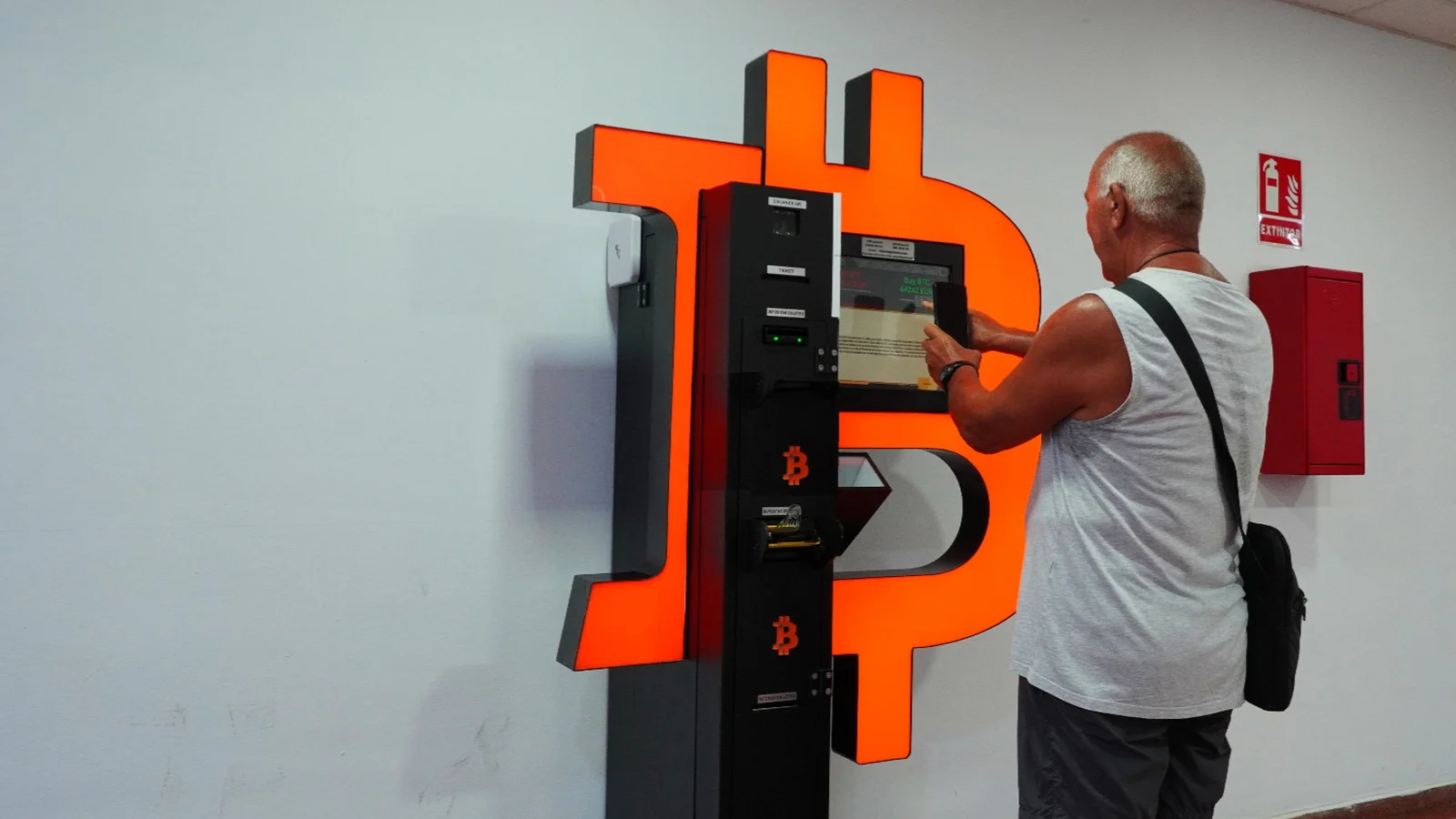
Bitcoin ATMs have seen significant growth over the 2020s, from just over 6,000 machines to just under 40,000 ATMs today, according to data from Coin ATM Radar; however, these machines have not been accepted everywhere, and some countries, localities and one state have banned crypto ATMs entirely due to a rise in fraud.
These machines provide a convenient way for customers to purchase bitcoin and other cryptocurrencies with cash, but fraudsters have also adopted them. Scammers pretend to be law enforcement, a loved one, or an authority figure and they convince victims to deposit cash into the bitcoin ATMs. This bitcoin is then sent to wallets under the scammer's control. As bitcoin transactions are non reversible, there is often few options for victims to get their cash back.
According to data from the FBI, $333 million was lost in 2025 due to bitcoin ATM fraud. The real number is likely much higher, as the report only covers reported incidents. There have been some efforts to combat fraud, such as by laws requiring refunds for victims, daily transaction limits for new users and warning signs. In addition, bitcoin ATM operators have put in place anti-fraud measures such as ID verification and guaranteed refunds for victims.
There are other concerns surrounding bitcoin ATMs as well on the national level, including their use in terrorism financing and money laundering and broader regulatory compliance issues.
Some countries, localities and one state have responded to these issues by banning bitcoin ATMs outright. Read on to find out which places in the world have banned bitcoin ATMs or have announced bans. This list will not include countries that have banned cryptocurrency or cryptocurrency transactions (such as China).
Countries
New Zealand
New Zealand announced plans to ban crypto ATMs in July 2025 as an addition to its Anti-Money Laundering and Countering Financing of Terrorism Act. Unlike other laws, the primary motivation behind this law is to prevent money laundering incidents where criminals take paper currency and convert it into cryptocurrency.
However, despite this move, crypto ATMs remain in a legal limbo in New Zealand, as the Cabinet has yet to formally declare the ban. As a result, there are more than 220 bitcoin ATMs still operating in the country by CoinFlip and Localcoin.
Minister Nicole McKee said in a report with Cryptocurrency NZ that "banning something is a serious decision that should not be taken lightly. That's why we're doing the work to ensure we fully understand the consequences before any final decision is made."
Singapore
Singapore banned crypto ATMs in 2022 as part of an effort to crack down on cryptocurrency advertisements. The Monetary Authority of Singapore declared that cryptocurrency operators cannot "promote their DPT(digital payment token) services to the general public."
The reason for this is that cryptocurrency is commonly used for money laundering and terrorism financing. The authorities argue that crypto ATMs act as a way of promoting DPTs to the public.
"Such convenient access may mislead the public to trade in DPTs on impulse, without considering the risks of trading in DPTs."
U.K.
The U.K. requires all cryptocurrency ATMs to be registered with the Financial Conduct Authority. In order to register, operators need to prove they have implemented anti-money laundering and terrorist financing controls.
Unfortunately, no bitcoin ATMs have registered with the FCA, so all of them are operating illegally. This makes bitcoin ATMs de facto illegal within the country. The authority and local police have begun a crackdown on bitcoin ATMs, especially in London.
Canada (under consideration)
The Canadian Liberal Party led government announced plans in late April 2026to completely ban crypto ATMs. This announcement was given in an economic update by the Liberal Party stating that crypto ATMs, were a "primary method for scammers to defraud victims and for criminals to place their cash proceeds of crime."
Although a bill has yet to be introduced, the announcement has received support, with 56% of respondents to a Research Co survey stating they supported a ban, with 26% in opposition and 18% uncertain.
If the ban were passed, it would take nearly 3,700 bitcoin ATMs offline. Canada is the second largest deployer of bitcoin ATMs, behind the U.S. at around 20,600 ATMs, according to data from Coin ATM Radar.
The United States
Indiana
Several states have discussed banning cryptocurrency ATMs, but Indiana was the first one to actually accomplish this task in March 2026. Governor Mike Braun officially signed the bill HB 1116, which "Prohibits the operation of virtual currency kiosks in Indiana."
The law also holds operators accountable under deceptive consumer sales laws and "may be ordered to forfeit one or both of: (A) the amount of the charges assessed to users of the person's virtual currency kiosks in Indiana during the period of the violation; and (B) any virtual currency kiosk operated by the operator in Indiana."
The law can also be applied to the owner of the retail, convenience store or other business that hosts the bitcoin ATM.
Vermont
On June 16, 2026, Vermont Gov. Phil Scottsigned into law an omnibus billthat completely banned crypto ATMs from operating in the state, which went into effect on July 1, 2026.
Previously, the state had required crypto ATM operators to display a fraud warning and have a translation limit of $2,000 daily for new customers. This change instead makes it a permanent ban stating, "No person shall locate, operate, or otherwise make available for use, or allow a third party to locate, operate, or otherwise make available for use, a virtual currency kiosk in Vermont."
Furthermore, all previous registrations are declared expired on July 1, 2026. However, operators are still obligated to provide refunds to victims of fraud from before the ban.
"For any virtual-currency kiosk transaction occurring after July 1, 2026, in violation of this section, the virtual-currency kiosk operator shall provide a full refund to the customer upon request of the customer or the Commissioner. The refund shall include any fees charged in association with the transaction," Bill H-0648 states.
Hawaii
Hawaii Gov. Josh Green signed HB 1642, which bans all cash-accepting crypto ATMs from operating in the state. However, it does not outright ban the devices completely, enabling customers to withdraw cash.
The text reads: "Beginning Oct. 1, 2026, it shall be an unlawful practice under this chapter for an operator to own, operate, or manage in the State a digital financial asset transaction kiosk that accepts United States currency from a customer in exchange for a digital financial asset."
The bill specifically mentions the rise of scams in the state as a key reason for the ban, noting that there has been a 99% increase in complaints from the FBI's Internet Crime Complaint Center since 2023. It also notes that scammers will "route funds to offshore platforms once the transactions are complete, which makes it very difficult to recover from the scammers."
Tennessee
Tennessee lawmakers signed a bill into place banning cryptocurrency kiosks. It was signed by Gov. Bill Lee and is set to take effect July 1st, 2026.
This law makes it a class A misdemeanor for anyone to "permit, place or otherwise operate a virtual currency kiosk in this state."
A class A misdemeanor is the highest rank of misdemeanor one can be charged for in the state of Tennessee. If convicted, defendants can carry jail time of up to 11 months and 29 times and fines of up to $2,500. Included in this list are domestic assault, first-time DUIs, violating a restraining order, theft of less than $1,000 and stalking, according to law office Massengill, Caldwell & Coughlin.
Minnesota
Minnesota is the third state to ban crypto ATMs as of May 5th. Gov. Tim Walz signed into law SF 3868, banning crypto ATMs from operating in the state and repealing the former regulatory framework for crypto ATMs. The law takes effect Aug. 1st, and gives operators until Dec. 31, 2026 to remove the ATMs.
The bill bans any person, "from installing, operating, maintaining or making available for use a virtual currency kiosk."
The bill adds, "On or before December 31, 2026, a virtual currency kiosk operator that conducts virtual currency transactions exclusively through a virtual currency kiosk must pay out any money or virtual currency held for or owed to a new or existing customer that exists as a result of virtual currency kiosk transactions. (b) A new or existing customer may elect, at any time before December 31, 2026, to receive a payout under this subdivision."
Localities
Layton, Utah
Layton, Utah passed an ordinance on March 23 banning all cryptocurrency ATMs from operating within city limits and gives operators 60 days to remove all machines. The primary motivation is to prevent scams, as the city saw around $2 million in losses from 2021 to 2025.
Spokane, Washington
Spokane, Washington's city council voted to ban crypto ATMs in June 2025. Much like Layton, operators had 60 days to comply. There were 50 crypto ATMs in the city at the time of the ban. The city council pointed to the vast sums lost by elderly victims to scams as the primary motivation behind the ordinance.
Stillwater, Minnesota
Stillwater, Minnesota, officially banned crypto ATMs in April 2025 following a wave of scams that cost victims $250,000, according to a report by Kare 11.
The city had previously passed an ordinance setting a daily limit of $2,000 at the crypto ATMs, but authorities noted that scammers found ways around this limit. In addition, many elderly victims are too frightened to pay attention to warnings on the ATM screen regarding fraud.
Massachusetts towns
Dartmouth, Massachusetts, approved a crypto ATM ban in June 2026 during a town council meeting. The ban was supported by local law enforcement including Police Chief Brian Levesque who said multiple seniors in the community had been scammed, including one that lost their entire life savings of $35,000.
Several towns in Massachusetts have also banned crypto ATMs, according to a report by WCVB. These include:
- Waltham, Massachusetts.
- Gloucester, Massachusetts.
- Haverhill, Massachusetts.
Massachusetts in general has not passed a law banning crypto ATMs, although it is currently considering multiple proposals, including an outright ban and one regulating crypto ATMs more generally: Bill S.804, which calls on operators to hire on a compliance officer and use blockchain analytics to prevent funds from going out to wallets associated with fraudulent activity.
Conclusion
It is likely that other states and localities will join this list over time, as Minnesota is currently considering a ban on crypto ATMs as well. Bitcoin ATM operators will need to work closely with lawmakers to ensure other regulatory compromises that can protect customers and avoid the worst-case scenario of a ban.
About Bradley Cooper

Bradley Cooper is an experienced editor for Connect Media. He has written across a wide range of beats, ranging from food to digital signage to banking, and is the current editor of ATM Marketplace and Food Truck Operator. His background is in information technology, advertising, and writing. When he’s not crafting a story, you can find him going for a run or spending time with his wife and three sons.
Related Media
SecurityPresented ByDiebold Nixdorf
Featured Vendor

Paragon ATM simulation tools provide the features, functions and flexible automation options so that you can run more tests in less time - improving quality, shortening delivery cycles, reducing costs, fostering collaboration, and increasing channel profitability.
Subscribe
Get the latest news and resources from ATM Marketplace.