Payments
What's new with currency exchange ATMs?
For international travelers, cash access is crucial. That's where currency exchange ATMs come in.
October 30, 2026 by Bradley Cooper — Editor, Connect Media
 ChatGPT
 Grok
 Perplexity
 Claude
One of the lesser-known features of ATMs is their ability to facilitate cross-currency exchange. For international travelers, they may find in different countries that acceptance of digital or even card-based payment systems can be quite low, so they need access to local currency for transportation, goods and services. In fact, in many cases, travellers use far more cash than they ever do back at home.
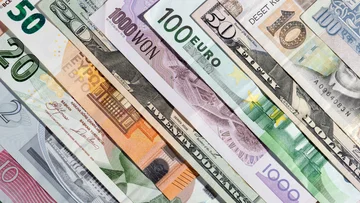
There are many ways to acquire foreign currency, from ordering it online ahead of time, purchasing from a clerk at an airport, or ordering it from an ATM. Travelex is one such company offering all of these services, with 600 locations across several international travel hubs.
Travel, however, is changing as travelers look for more affordable destinations and access to a range of payment options, from cash to prepaid cards.
To learn more about this side of ATMs, ATM Marketplace spoke with Beth Williams, global director of payment solutions for Travelex.
Q. What is the biggest trend in currency exchange in 2026?
Williams: The demand for currency pivots around travel trends, which vary from region to region.
We are seeing a growing demand for alternative destinations, which is driven by both value and the desire for new experiences. In Europe, travelers are increasingly looking toward more affordable destinations in Eastern and Southeastern Europe and North Africa, while social media and new visa arrangements are encouraging Australians and New Zealanders to explore less traditional locations. We're seeing that reflected directly in currency demand: sales of Brazilian real in the UK rose 102% year-on-year, while Moroccan dirham sales in New Zealand increased 128%.
At the same time, the way people are managing their travel money is evolving. Rather than choosing between cash and card, travelers increasingly want both, influenced by where they are and what they are buying. They are also organizing their travel money earlier, increasingly before they reach the airport.
So, the overall trend is toward greater choice when pre-trip planning as well as in-trip management and access to cash and card solutions.
Q. What sort of tech is Travelex using?
Williams: We're prioritizing solutions that make physical travel money more convenient and accessible for our customers, particularly in airports.
Two years ago we completed a major ATM transformation project across more than 600 machines in eight countries. We introduced features such as touchscreens, barcode readers and, at selected locations, contactless cash withdrawals. More recently, we've launched Nomad in the UK and Europe, our fully equipped mobile store. It can be positioned wherever passenger demand is highest and offers more than 50 currencies, online order collection and Travelex Money Cards. After piloting the concept at Zurich Airport, we have rolled it out at Manchester and Liverpool Airports.
The principle is simple: utilize technology and more flexible formats to put travel money where customers need it.
Q. Declining cash usage is an overall trend in some countries. Does this impact travel as well? Why or why not?
Williams: Domestic cash usage and travel cash usage are moving very differently.
While people may be using less cash for everyday purchases at home, their behavior changes significantly when they travel. Our research found that 79% of British travelers use cash abroad, rising to 84% in Australia and 91% in the Netherlands. More than half of British travelers also said they use more cash overseas than they do at home.
There are practical reasons for that. Cash remains useful for tipping, small purchases, markets and places where cards may not be accepted, while also providing a backup if a card is lost or does not work. Cards, meanwhile, can offer convenience for larger purchases.
So, we don't see cash and card as competing with one another. The dominant behavior is increasingly to travel with both and use each where it makes most sense.
Q. How does Travelex remove any customer experience pitfalls in currency exchange?
Williams: One of the biggest friction points in travel money is access: where to get it, when to get it and whether to use cash or card. Our focus has been on making those choices as simple as possible.
In many markets, customers can combine foreign currency cash with a prepaid Travelex Money Card, so they do not have to choose one payment method over another.
We also give customers multiple ways to access their travel money, from airport and city-centre stores to online ordering, Click & Collect and home delivery. Partnerships extend that reach even further: in Australia, customers can collect foreign cash through around 3,000 Australia Post locations, while in New Zealand TSB customers can access preferential Travelex rates online and across our store network.
Newer formats such as Nomad give us even more flexibility to put services where demand is highest. Ultimately, the aim is to make acquiring travel money convenient whether somebody plans weeks ahead or needs it on the way to their gate.
Q. What are some of Travelex's newest offerings?
Williams: Alongside the introduction of Nomad and the continued expansion of our airport network, partnerships are an increasingly important part of how we reach customers.
In New Zealand, our new partnership with TSB gives its customers access to preferential rates on foreign currency cash and the Travelex Money Card, both online and through Travelex stores.
In Australia, we have partnered with Everyday Rewards, allowing customers to earn points when buying or selling foreign currency and when loading or reloading a Travelex Money Card.
Both are good examples of how we are making travel money easier to access while also adding more value around the transaction itself.
Q. Looking to the future, what do you see as a future trend?
Williams: One of the strongest trends we're seeing is customers shifting towards arranging travel money earlier. The pre-trip market is an important focus for us.
More than a third of British travelers now acquire their travel money a month or more before their trip, while just 6% wait until the day they travel. In Australia, almost half buy it at least one month ahead of their trip, with only 3% waiting until the day of travel. Travelers are moving away from treating foreign currency as a last-minute airport purchase and increasingly organizing it well before departure.
That changes how the industry needs to engage with customers. The opportunity is increasingly pre-trip: reaching travelers earlier online, helping them plan their travel money and then giving them a choice of how they receive it, whether through home delivery, local collection, airport collection or an ATM.
So, the future of travel money is increasingly about becoming part of the travel planning process, rather than simply being a one-stop transaction at the airport.
About Bradley Cooper

Bradley Cooper is an experienced editor for Connect Media. He has written across a wide range of beats, ranging from food to digital signage to banking, and is the current editor of ATM Marketplace and Food Truck Operator. His background is in information technology, advertising, and writing. When he’s not crafting a story, you can find him going for a run or spending time with his wife and three sons.
Subscribe
Get the latest news and resources from ATM Marketplace.