Innovation
Are ATMs the right fit for commercial developments?
Are ATMs right for your retail business, commercial real estate or apartment? In this article, we take a deep dive into cash usage and ATM pros and cons.
April 28, 2026 by Bradley Cooper — Editor, Connect Media
 ChatGPT
 Grok
Grok Perplexity
 Claude
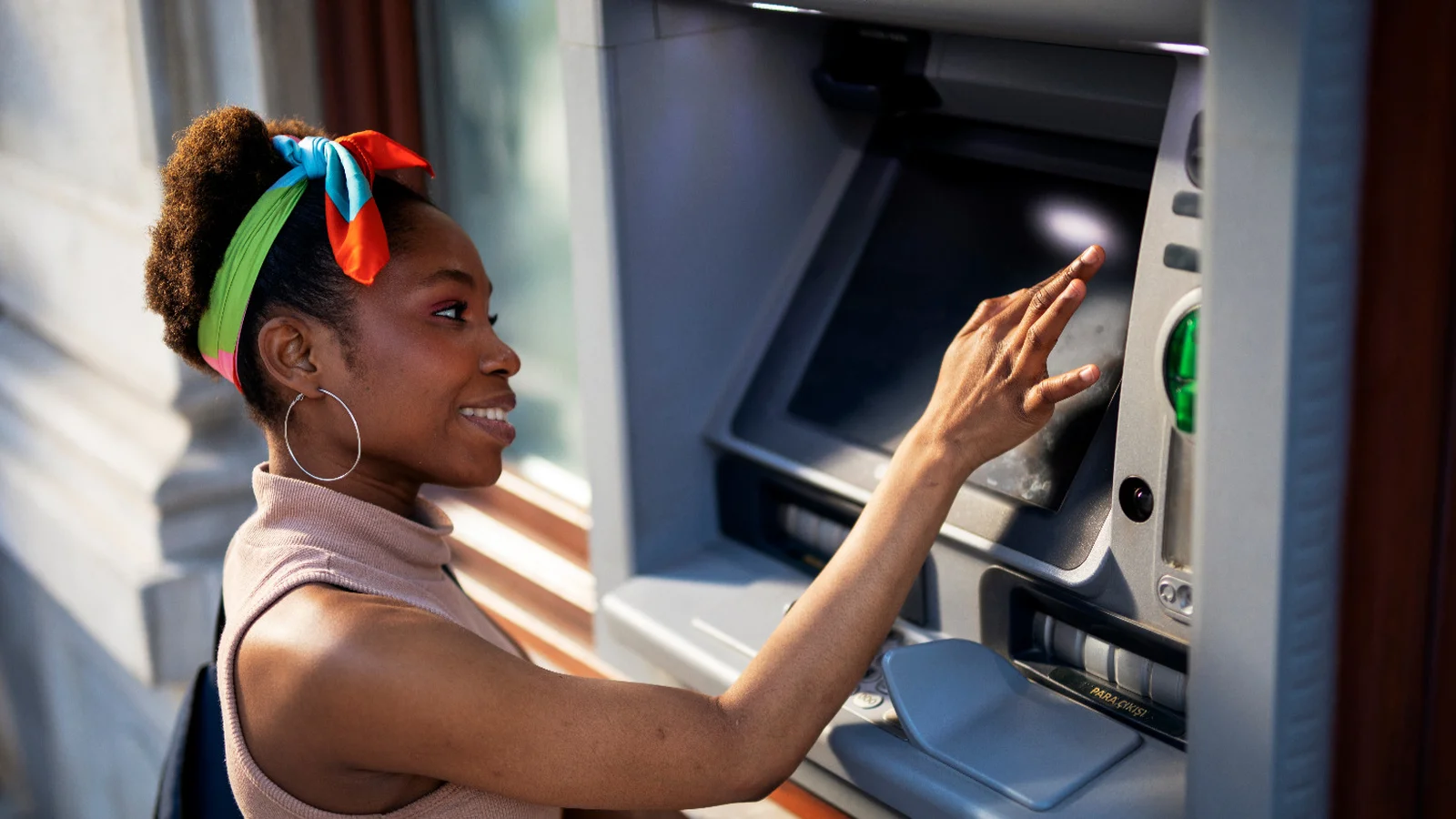
Should commercial, apartment developers or retail real estate install ATMs? This single question brings up a series of follow-up questions related to cash usage, security and whether customers really want ATMs in 2026. There's also the issue of who to work with for an ATM installation, whether one should partner with a community bank, an independent ATM deployer, or some other company.
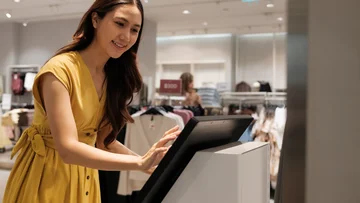
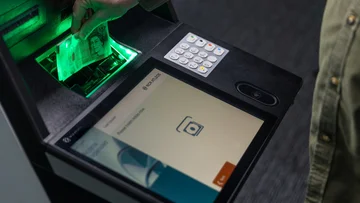
There's also the fact that ATMs aren't simple devices anymore. The ATM of the past only dispensed cash, with the only point of customer contact being a tiny screen and physical buttons. Newer devices go beyond this to offer customers a more advanced self-service financial solution.
In this article, we will take a look at cash usage trends, security issues and other questions to help you determine if an ATM is the right fit for your space.
Cash usage remains strong
One of the most common objections to ATMs is the notion that society is going cashless, and cash will soon be outdated, especially with the continual growth of cards, mobile and digital payments.
Cash has certainly declined over the years. In 2012, it accounted for 31% of transactions. That number dropped to 26% in 2019, and continued to fall due to the impact of COVID-19 and concerns over cash cleanliness. Since then, cash usage has hit a plateau at around 16 to 18% of transactions, according to a blog from Clearly Payments.
The Federal Reserve Financial Services confirms these findings in its Consumer Payments Choice survey, stating that cash accounts for 14% of all payments. What's interesting about their findings is that consumers ranked cash third as a top payment option. Another key finding is that 80% of U.S. consumers kept cash on them at least one day out of the month. In 2024, consumers made an average of seven payments per month with cash, which has remained unchanged since 2020.
Cash in circulation has also risen as well, by 33% since 2020 to $2.4 trillion.
ATMs a top consideration for customers
Data supports the claim that customers still want ATMs, especially in convenient locations. Ben Bregman, SVP of NCR Atleos, stated in asession held at ATMIA that ATMs are the second most preferred banking touchpoint for customers at 54%, topped only by bank mobile apps at 61%.
Gen Z echoed the importance of ATMs, with 41.7% stating they would consider switching banks because of a closer ATM.
A study by NCR Atleos confirms that customers are aware of retail ATMs and many choose to come that store just to use that ATM. For example, 28% of respondents went to a store for the sole purpose of using an ATM, while 88% were aware of an ATMs presence in the store. If removed, 35% said they would shop at a store less frequently, and 55% of retail ATM users said they made purchases while they were at the store.
Self-service banking trends
However, customers don't just want a traditional ATM; they want a device that can handle a great deal of their financial needs. This is especially true due to the decreasing number of bank branches in the U.S. from around 82,000 in 2008 to 68,000 in 2024.
So what do customers want ATMs to do? On the basic level, they want to be able to deposit cash and checks, whether that be tips or birthday gifts at an ATM, without having to go inside a branch. Bregman identified several other wants in an NCR Atleos survey such as:
- 23% want to pay bills.
- 52% want pickup or fulfill sending of cash.
- 63% want cash advances.
He said the customer's thought process is: "I can do this on my phone. I want to be able to do this anywhere."
On a more advanced level, customers may want:
- Small business deposits.
- Gift card purchases.
- Check bank balances/transfer money.
- Dynamic currency exchange in high travel areas.
- Sign up for banking products.
One other trend in ATMs is thesurcharge-free networks. Independently owned ATMs charge a fee for withdrawing cash, and banks often charge fees as well for out-of-network usage. Surcharge free networks remove the fee while supporting multiple banks, such as the STAR network with more than 2 million ATMs and 5,700 participating financial institutions or the Allpoint Network with 55,000 ATMs.
Benefits for retailers
As mentioned above, customers who go to an ATM are more likely to spend money at a store. This especially fuels impulse spending, as cash is used for small purchases like candy or a gift. It can also boost foot traffic, as customers are more likely to visit if there's an ATM nearby, especially an advanced one.
Retailers and commercial real estate can also improve the guest experience through ATMs, especially advanced ones, or ATMs that are apart of a surcharge free network. By offering self-service options, retailers and commercial real estate properties can stand out and improve their brand image.
Some cons to consider
There are some notable cons to consider when installing ATMs. First off are thefees.The average ATM fee for out-of-network transactions is $4.86. This can be quite pricy for some users, especially those only withdrawing $20. This can be offset by surcharge-free networks or banks that reimburse fees, but it is still an issue to consider.
The biggest concern by far is ATM security. Off-premise ATMs are often targeted by opportunistic criminal groups to steal the device and remove the cash. These can be simple operations from breaking into the building at night and ripping the ATM out of the wall with a truck in what's known as a hook and chain attack, or more complex malware attacks called jackpotting. In these attacks, the criminal tricks the ATM into spitting out cash as part of a supposedly legitimate transaction.
Criminals may also install devices on ATMs, such as cash trapping tools. These devices trap the cash when customers try to withdraw, so they think the ATM is broken. The criminals return later to take the trap and the cash within. In some hotspot areas, like Chicago, some smaller businesses don't replace their ATMs after thefts to avoid being targeted.
Closing thoughts
ATMs may not be right for every retailer or commercial development, but they can play a critical role both in providing cash for customers and improving the overall guest experience. Customers are used to self-service and they appreciate having convenient access to all their cash and many of their banking needs at a closeby ATM.
FAQ
Q. Is an ATM still relevant in a "cashless" society in 2026?
A: Yes. While digital payments have grown, cash usage has plateaued at a steady 14% to 18% of all transactions.
- Stability: U.S. consumers still make an average of seven cash payments per month, a figure that has remained unchanged since 2020.
- Safety Net: 80% of consumers still carry physical cash at least once a month.
- Circulation: Cash in circulation has risen by 33% since 2020, reaching $2.4 trillion.
Q. Do customers actually want ATMs in retail and commercial spaces?
A:Absolutely. ATMs are currently the second most preferred banking touchpoint (54%), trailing only mobile apps. For younger demographics like Gen Z, ATM proximity is a major factor in brand loyalty, with over 41% stating they would switch banks for a closer ATM.
Q. How does an ATM benefit my business or property?
A:Installing an ATM can turn your location into a destination rather than just a stop, it does all of the following:
- Increased foot traffic: 28% of customers visit a store solely to use an ATM.
- Boosted sales: 55% of ATM users make a purchase at the host store, often fueling "impulse buys" for small items.
- Retention: 35% of shoppers say they would visit a store less frequently if the ATM were removed.
Q. What modern features should I look for beyond cash dispensing?
A: In 2026, the "basic" ATM is being replaced by interactive teller machines (ITMs) and advanced self-service kiosks. Customers now expect:
- Cash and check deposits: Especially for small business owners and "gig economy" workers.
- Financial services: 63% want cash advances, while 52% look for cash sending/pickup options.
- Digital integration: Support for NFC (contactless), QR code withdrawals and even purchasing gift cards or paying bills.
Q. What are the major security risks in 2026?
A:Security remains the biggest hurdle for off-premise ATMs. Key threats include:
- Physical attacks: "Hook and chain" attacks where criminals attempt to pull the machine from its foundation.
- Jackpotting: Sophisticated malware attacks that force the machine to dispense all its cash.
- Cash trapping: Physical devices placed over the shutter to steal dispensed bills.
Pro tip: Modern mitigations include vibration sensors, hard drive encryption and AI-driven real-time threat detection.
About Bradley Cooper

Bradley Cooper is an experienced editor for Connect Media. He has written across a wide range of beats, ranging from food to digital signage to banking, and is the current editor of ATM Marketplace and Food Truck Operator. His background is in information technology, advertising, and writing. When he’s not crafting a story, you can find him going for a run or spending time with his wife and three sons.
Included In This Story

NCR Atleos
NCR Atleos expands self-service financial access for retailers and financial institutions who leverage our expertise, operational scale, always-on global services and constant innovation to deliver convenient self-service banking.
Related Media
InnovationPresented ByHyosung
SecurityPresented ByDiebold Nixdorf
Subscribe
Get the latest news and resources from ATM Marketplace.