Branch Transformation
Branch Automation: A Resiliency Blueprint for Credit Unions and Community Banks
Credit unions and community banks face growing pressure to modernize. Explore how branch automation enables them to deliver digital convenience and local trust to consumers.

January 21, 2026
 ChatGPT
 Grok
Grok Perplexity
 Claude
Over the last several years, there have been several indications that more and more banking customers are seeing the benefits of banking with a credit union. From 2020 to 2023, credit unions increased their share of primary credit cards from 6% in 2020 to 8.3% in 2023, according to a study by PYMNTS Intelligence and Elan Credit Card.
There appears to be an even greater appetite among younger generations to embrace credit unions, with a study from Apiture and The Harris Poll finding that approximately half of Gen Z and millennials are open to switching from larger financial institutions to credit unions or community banks1.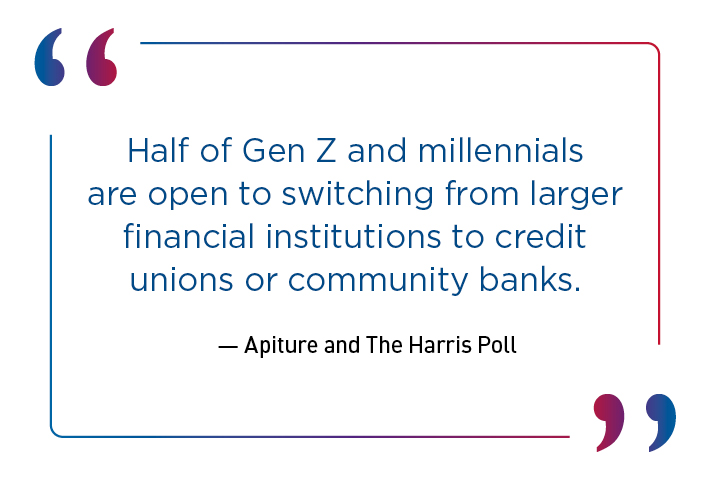
These kinds of trends shouldn’t be surprising, given the strong personal connections that credit unions foster with members and their critical role in maintaining the financial health and economic development of their local communities. By providing personalized service, supporting local businesses, and reinvesting in their communities, credit unions are essential for maintaining financial inclusion and offering services to those who might otherwise be underserved.
However, in a rapidly evolving financial landscape, credit unions face increasing competition from banks and fintechs, placing added pressure on them to modernize and stay relevant. Limited budgets and smaller technology teams make it difficult for them to keep pace with the latest digital services of larger competitors. In contrast, outdated technology can hamper operational efficiency, increasing transaction processing costs and weakening a credit union’s ability to meet evolving consumer expectations. The reality is that consumers have more options than ever for financial services, and it’s crucial for credit unions to find ways to offer competitive, seamless digital experiences to retain member loyalty.
Branch Automation as a Catalyst for Resilience
The key to unlocking resiliency for credit unions may be found in automating and innovating the branch self-service channel. Sitting at the intersection of consumers’ physical and digital financial lives, the self-service channel plays a pivotal role in helping credit unions tap into the everyday challenges their members face and ultimately strengthen their relationships with members.
Branch automation can essentially supercharge a credit union’s self-service channel, allowing the ATM to fully integrate with core banking operations and deliver services far beyond cash transactions. By essentially bringing the branch to the ATM channel, credit unions can improve operational efficiency, reduce transaction costs and provide faster, more secure services.
Video & Interactive Tellers: A Unique Solution for Credit Unions
Every day, several activities happen at the branch, from simple transitions like deposits and check cashing to more complex transactions like bill payments and currency transaction reporting. Credit unions have a unique opportunity to leverage video and interactive tellers to migrate these transactions to the self-service channel. Not only would this help streamline services with their members and save branch staff valuable time every day, but it would ultimately enhance their community-oriented service model while remaining competitive in a fast-paced digital world.
Leveraging video and interactive tellers can be especially valuable for credit unions by automating the services that are core to the lifeblood of small and medium-sized businesses (SMBs). Video and interactive tellers can help members perform advanced transactions outside of regular business hours with advice and assistance from live staff, generating added value for SMB members while reducing the complexity of in-branch operations.
Moving transactions from the teller to self-service technology can reduce friction, lower operational costs and create an adaptable infrastructure that can evolve with new technologies. By meeting or exceeding the digital offerings of fintechs and big banks, credit unions can offer the digital convenience and speed that today’s consumers expect, increasing satisfaction and loyalty.
Ultimately, the future of credit unions relies on their ability to evolve with industry standards and meet consumers’ digital expectations. While branch automation can provide a clear, manageable path to this evolution, it will require credit unions to embrace innovation and educate their members on how innovation will help their everyday lives. These institutions should not sacrifice the attributes that make them attractive to consumers in the first place but rather invest in solutions that enable them to maintain their community impact while navigating the complexities of the modern financial landscape.
For credit unions, improved efficiency and lower costs can be reinvested into the community, supporting local development and deepening the institution’s role as a trusted community partner. By investing in the right technology, credit unions can position themselves not only to survive but to thrive – continuing to provide trusted, localized financial services that truly benefit the communities they serve while remaining competitive in a fast-paced digital world.
Originally published in Credit Union Times.
Source:
1 https://www.apiture.com/half-of-gen-z-and-millennials-open-to-switching-primary-financial-institution-to-a-community-bank-online-only-bank-or-credit-union-new-apiture-study-finds/
Included In This Story

Diebold Nixdorf
As a global technology leader and innovative services provider, Diebold Nixdorf delivers the solutions that enable financial institutions to improve efficiencies, protect assets and better serve consumers.
Related Media
Subscribe
Get the latest news and resources from ATM Marketplace.